The Beast of Gévaudan: France’s Real-Life Monster That Terrorised a Nation
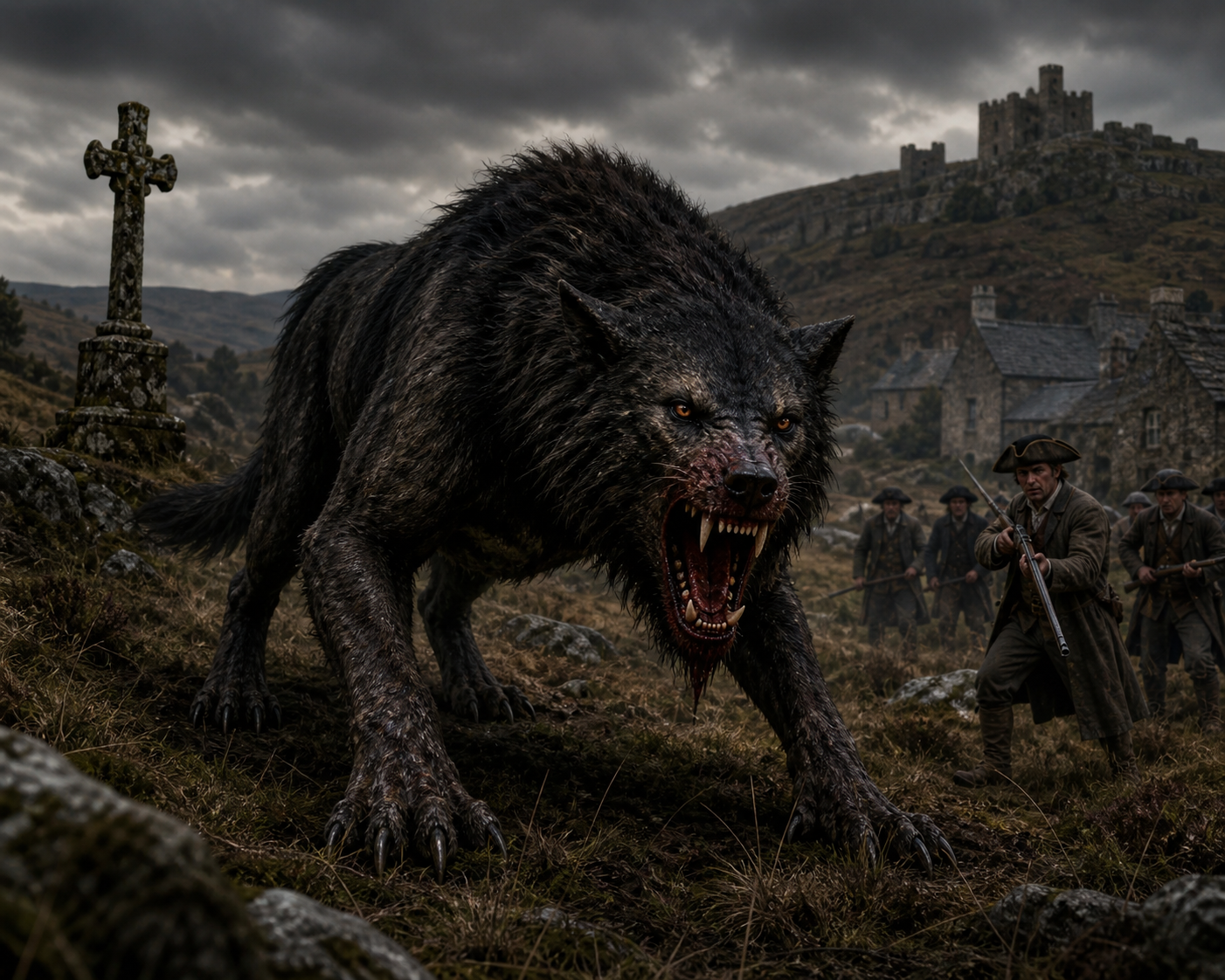
What Was the Beast of Gévaudan?
Between 1764 and 1767, a mysterious creature terrorised the rural region of Gévaudan in southern France. Over the course of three years, dozens of people were killed in a series of brutal attacks that shocked the country and drew the attention of King Louis XV himself.
Witnesses consistently described the attacker as a wolf-like beast, but far larger and more aggressive than any known wolf. It was said to have a broad chest, powerful jaws, and an almost unnatural resistance to bullets. Despite multiple hunting campaigns, the creature continued to evade capture, deepening the mystery and fear surrounding it.
To this day, the Beast of Gévaudan remains one of Europe’s most chilling cases where history and folklore blur into legend.
Where Did the Attacks Happen?
The attacks occurred in the historic province of Gévaudan, now part of the Lozère department in southern France. This region was rural, mountainous, and sparsely populated in the 18th century — making it the perfect environment for something to hunt undetected.
Victims were often attacked in open countryside or while travelling between villages. Many were women and children, which only intensified the panic among local communities.
Eyewitness Descriptions of the Beast
Reports from survivors and witnesses shared striking similarities:
A creature larger than a wolf, sometimes described as the size of a calf
A long tail and dark reddish or black fur
A wide head with sharp teeth and glowing eyes
Unusual behaviour — targeting the throat and dragging victims away
Some accounts even claimed the beast could withstand gunfire, fuelling speculation that it was not a normal animal.
The Royal Hunt: When the King Intervened
As the death toll rose, the attacks became a national crisis.
King Louis XV sent professional hunters and soldiers to track and kill the creature. Hundreds of men were involved in organised hunts across the region. Large wolves were killed, and for a time, it was believed the threat had ended.
But the attacks continued.
This failure only added to the growing belief that the Beast of Gévaudan was something far more dangerous — or something not entirely natural.
The Final Kill… Or Was It?
In June 1767, a local hunter named Jean Chastel reportedly killed a large wolf-like animal believed to be the Beast. Following its death, the attacks stopped.
However, questions remain:
Was this truly the same creature responsible for all attacks?
Were there multiple animals involved?
Or did the killings stop simply because fear had peaked?
The truth was never definitively proven.
Theories Behind the Beast of Gévaudan
Over the centuries, several explanations have been proposed:
1. A Pack of Wolves
The most widely accepted theory is that multiple wolves were responsible. Wolves were common in the region at the time, and coordinated attacks could explain the scale of the killings.
2. An Exotic Animal
Some believe the beast may have been a large predator escaped from captivity, such as a hyena or lion. This could explain its unusual appearance and behaviour.
3. A Trained Killer
A darker theory suggests the attacks were carried out by a trained animal controlled by a human, possibly for unknown motives.
4. Myth and Fear Amplification
It’s also possible that fear, rumours, and media coverage exaggerated the events, turning a series of attacks into a national legend.
Why the Legend Still Lives On
The Beast of Gévaudan remains one of the most fascinating cases in paranormal and historical mystery because it sits on the line between documented history and folklore.
Unlike many myths, this event is backed by:
Official reports
Eyewitness testimonies
Royal involvement
Recorded deaths
Yet despite all of this, no single explanation has ever been confirmed.